AI translation vs human interpreters: Which one fits
your event?
AI translation is great for everyday presentations and conversations. A qualified human interpreter brings context, judgement and specialist knowledge. Choose what fits the risk and purpose of your event.
In short
Should you use AI translation or a human interpreter?
Updated
Choose by the risk of the conversation, not only the budget. Live AI translation suits everyday presentations, community events, training and routine multilingual exchanges, especially when you need several languages at once or listeners spread across a big hall. One SalamAI console runs up to ten languages, and listeners use their own phones instead of receivers. A qualified human interpreter brings context, judgement and specialist knowledge, and takes professional responsibility for meaning. Use one for legal proceedings, clinical decisions, consent and other sensitive discussions. Many programmes can mix both: an interpreter for the sensitive session, and AI translation for the rest.
- Choose AI translation when the content is everyday, you need several languages, listeners can use phones and headphones, and a 6–20 second audio delay is fine.
- Choose a qualified interpreter when a mistake carries legal, clinical or financial risk, the terms are highly specialised, or someone must take professional responsibility.
- Mix both when one session is sensitive but the rest of the programme is routine.
What does each option need on the day?
Human simultaneous interpreting usually needs interpreters booked for each language pair and, for in-person events, often booths, consoles and audience receivers arranged through the interpreting provider. Live AI translation with SalamAI needs a computer with a supported browser, your existing microphone or mixer, internet for the console and every listener, and audience phones with earphones. One console runs up to ten output languages, and each language is billed for its connected time. Whichever you choose, rehearse with the real speakers, languages and room before the event.
Can AI translation and an interpreter work together?
Yes, across your programme. Many events book a qualified interpreter for the sessions where a mistake carries the most risk, such as legal briefings, medical talks or formal negotiations, and use AI translation for keynotes, panels, workshops and informal sessions where covering many languages matters more than specialist precision. Decide session by session, using the risk of a mistake as your guide, and tell your audience which sessions are AI-translated so they know what to expect.
Read nextLive translation pricing →Live translation use cases →
AI and human interpreting
Compare setup, delivery and cost.
On smaller screens, scroll the table horizontally to compare.
| What matters | Professional interpreting | SalamAI |
|---|---|---|
| Getting started | Arrange availability, language pairs and the interpreting format. | Open a browser, choose an audio source and select supported languages. |
| Language outputs | Arrange an interpreter or team for the language pairs needed. | Up to ten simultaneous outputs from one console, each billed separately. |
| Audience delivery | In-person and remote formats depend on the service and equipment. | Shared listening links distribute audio and captions to audience browsers. |
| Cost structure | Pricing depends on the provider, language, duration and event format. | Connected session time per language or direction, using your organisation’s rate card. |
| Context and judgement | A qualified interpreter understands context, meaning and specialist terms. | AI translation can make errors; suitability depends on the setting and language pair. |
| Best suited to | Discussions that need specialist interpretation, careful judgement or professional responsibility. | Everyday presentations, community events and routine multilingual exchanges. |
Understand your usage
A clear view of the cost.
There is no universal interpreter rate, and SalamAI pricing depends on your organisation’s rate card. Compare an event quote against the connected session minutes, language outputs and translation types you expect to use.
See pricing and team controlsInside SalamAI
Listen on a phone, like an app.
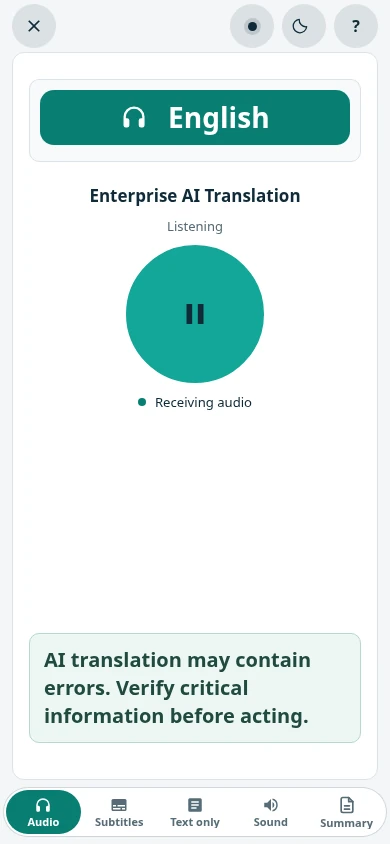
Listeners tap Play to hear the translation, then switch between Audio, Subtitles and Text only from the bar at the bottom. Sound picks the audio output, and Summary requests documents where enabled.
Common questions
AI and human interpreting questions
Can AI replace a qualified interpreter for every event?
No. AI can make mistakes and miss context. Use qualified interpretation for sensitive legal, clinical, consent or other high-risk discussions. Test AI translation for your everyday event content before choosing it.
Is AI translation always cheaper than human interpreting?
No price comparison fits every event. Compare the interpreter quote with the languages, connected time, equipment and optional processing in your AI setup. SalamAI uses your organisation’s agreed rates.
Does SalamAI provide human interpreters?
SalamAI is AI translation software. If your event needs a human interpreter, arrange a qualified interpreter separately.
Plan your event
Event coming up?
Let everyone understand.
Tell us your languages, crowd size and audio setup. We’ll show you SalamAI live and suggest the right setup for your event.
Already have an account? Open the console →